
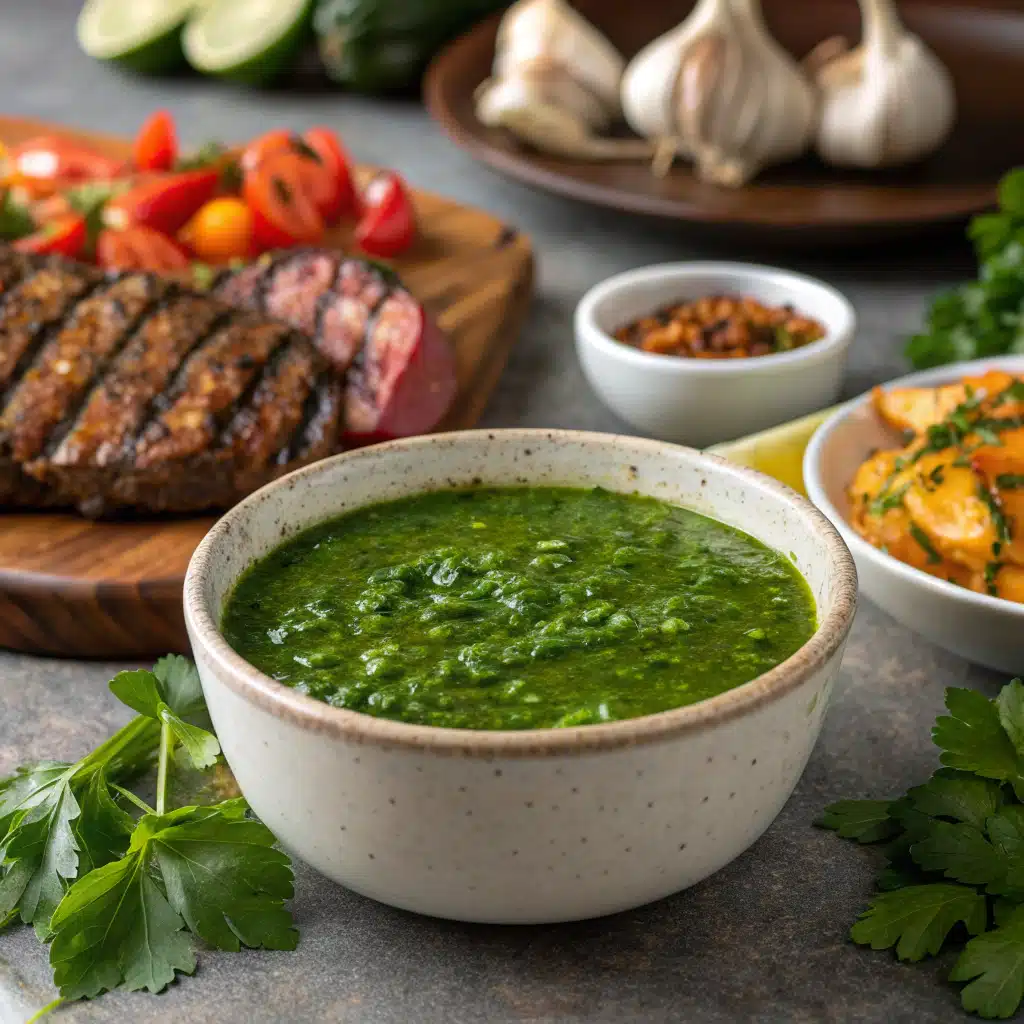
The Essential Guide to Chimichurri Sauce: South America’s Vibrant Steak Companion
Introduction
Chimichurri is not just a sauce; it is the vibrant, herbaceous soul of Argentine and Uruguayan cuisine, especially essential to the tradition of Asado (barbecue). Far brighter and fresher than a traditional pesto, this uncooked condiment is defined by its powerful punch of finely chopped parsley, garlic, oregano, and a generous dose of red wine vinegar and olive oil. Originating in the Pampas region, Chimichurri’s purpose is twofold: to cut through the richness of grilled meats and to elevate every bite with a burst of acidity and freshness. It is a mandatory addition to any serious grilling repertoire.
Ingredients
This recipe yields approximately 1.5 cups (360 ml) of sauce.
- Fresh Flat-leaf Parsley: 1 cup, tightly packed (approx. 60 g)
- Fresh Oregano Leaves: 1/4 cup, tightly packed (approx. 15 g)
- Garlic: 4 medium cloves, finely minced
- Red Wine Vinegar: 1/4 cup (60 ml)
- Extra Virgin Olive Oil: 1/2 cup (120 ml)
- Red Chili Flakes (or finely chopped Aji): 1 teaspoon (5 ml)
- Kosher Salt: 1 teaspoon (5 g), or to taste
- Freshly Ground Black Pepper: 1/2 teaspoon (2.5 g)
Step-by-step Preparation
- Prep the Herbs: Wash and thoroughly dry the parsley and oregano. Using a sharp knife, finely chop the herbs. The key to authentic Chimichurri is texture—the herbs should be minced, not pureed. Avoid using a food processor if possible, as it can turn the mixture into a paste.
- Combine Dry Ingredients: In a medium non-reactive bowl, combine the chopped parsley, oregano, minced garlic, red chili flakes, salt, and pepper. Mix well to ensure the spices are evenly distributed.
- Add Liquids: Pour the red wine vinegar over the herb mixture, stirring to coat. The acidity of the vinegar helps to ‘bloom’ the herbs and spices. Next, slowly drizzle in the extra virgin olive oil, stirring continuously until the sauce is well emulsified (it should look slightly thick and glossy).
- Rest and Marinate (Crucial Step): Cover the bowl and allow the Chimichurri to rest at room temperature for at least 30 minutes, and ideally 2 hours. This resting period allows the flavors to marry and the vinegar to soften the raw garlic, resulting in a deeper, more complex sauce. *Tip: If you are serving it over steak, prepare the sauce before you start grilling.*
- Final Adjustment: Before serving, taste the sauce. If it seems too acidic, add a tiny splash more olive oil. If it lacks punch, add a pinch more salt or chili flakes.
Nutritional Information
Chimichurri is a surprisingly healthy condiment, primarily composed of heart-healthy fats and fresh herbs. An approximate serving of 2 tablespoons contains around 100-120 calories, 12g of fat (mostly monounsaturated), and minimal carbohydrates or protein. The generous amount of parsley and oregano provides excellent sources of antioxidants, Vitamin K, and Vitamin C.
Storage
Store leftover Chimichurri in an airtight container in the refrigerator. Due to the high acid content, it preserves well for up to 7 days. Note that the color may darken slightly (oxidize) after the first day, but the flavor will actually deepen and improve. If the oil solidifies slightly when chilled, simply let it sit at room temperature for 15-20 minutes before serving.
Conclusion
While Chimichurri is traditionally the perfect accompaniment for grilled Argentine beef (such as flank steak or skirt steak), its utility extends far beyond the grill. Try drizzling it over roasted vegetables (especially potatoes or asparagus), mixing it into scrambled eggs, or using it as a marinade for chicken or firm white fish. For a variation, try adding a tablespoon of smoked paprika for a “Chimichurri Rojo” (Red Chimichurri), or substitute cilantro for half of the parsley for a Peruvian twist.